The Power of Digital Marketing in the Modern Business World
INTRODUCTION
In today’s fast-paced digital era, businesses are no longer limited to traditional marketing methods. The rise of technology has transformed how brands connect with their audience, making digital marketing one of the most powerful tools for growth.
From social media platforms to data-driven analytics, digital marketing allows businesses to reach the right audience at the right time with precision and efficiency.
WHAT IS DIGITAL MARKETING?
Digital marketing refers to promoting products or services using online channels such as:
- Social media platforms
- Search engines
- Email marketing
- Websites and blogs
- Mobile apps
It focuses on engaging customers digitally, tracking their behavior, and optimizing strategies based on data.
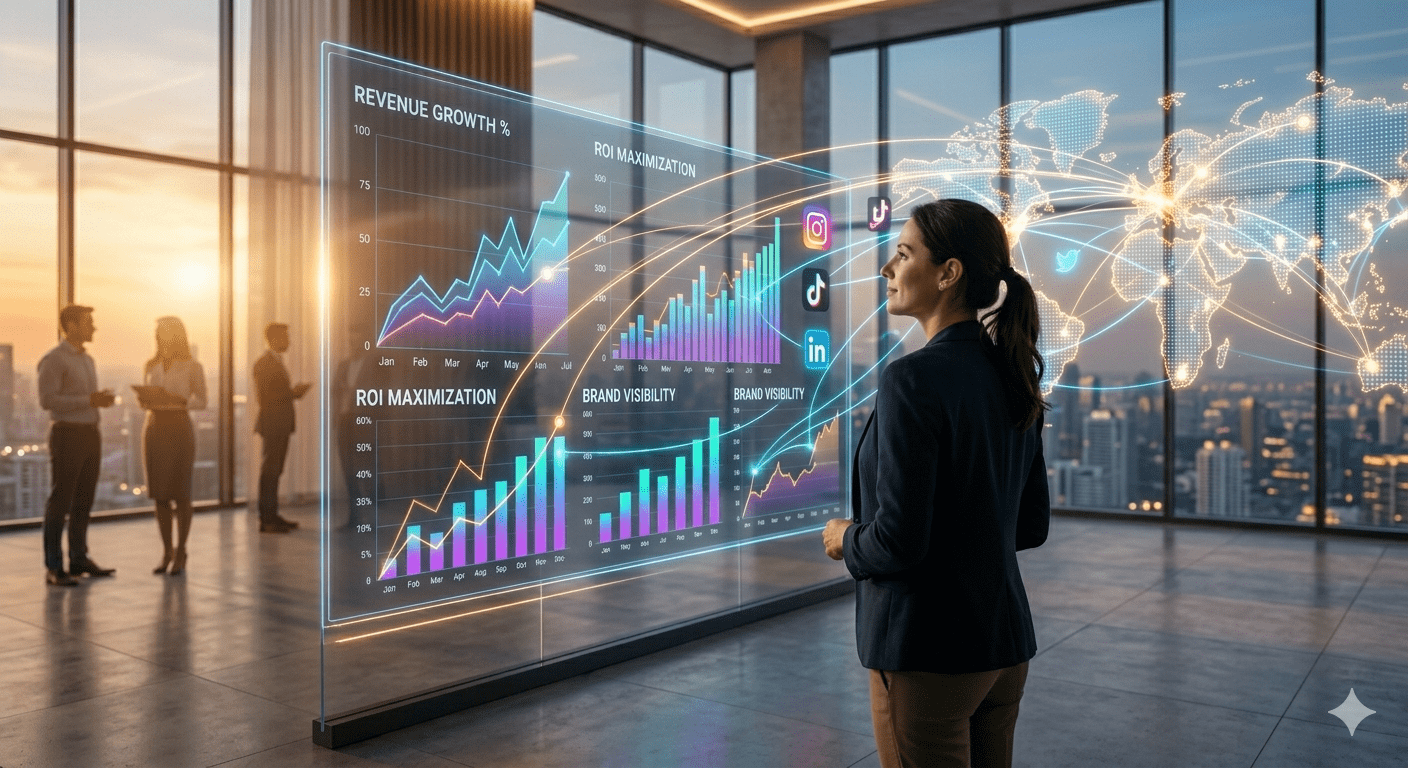
UNDERSTANDING THE IMAGE
The image perfectly represents a modern digital marketer:
- A professional working on a laptop with analytics dashboards
- Floating icons of platforms like Instagram, LinkedIn, Facebook, TikTok
- Graphs showing growth, engagement, and performance
- A clean, tech-driven office environment
This highlights how digital marketing combines creativity + data + technology.
Key Components of Digital Marketing
1. Social Media Marketing
Platforms like Instagram, Facebook, LinkedIn, and TikTok help brands:
- Build awareness
- Engage with users
- Run targeted ads
👉 Example: Viral reels or influencer collaborations
2. Search Engine Optimization (SEO)
SEO helps your website rank higher on search engines like Google.
Key elements:
- Keywords
- Backlinks
- High-quality content
- Website speed
👉 Result: More organic traffic without paid ads
3. Content Marketing
Content is the backbone of digital marketing.
Types include:
- Blogs
- Videos
- Infographics
- Podcasts
👉 Goal: Provide value and build trust with the audience
4. Email Marketing
Still one of the most effective methods.
Benefits:
- Personalized communication
- High ROI
- Customer retention
5. Pay-Per-Click Advertising (PPC)
Paid ads that appear on search engines and social platforms.
👉 You only pay when someone clicks your ad.
6. Data Analytics
This is what your image strongly emphasizes.
Tools track:
- User behavior
- Conversion rates
- Campaign performance
👉 Helps businesses make smart, data-driven decisions
Why Digital Marketing is Important
✔ Global Reach
You can target audiences worldwide.
✔ Cost-Effective
Cheaper than traditional marketing.
✔ Measurable Results
Everything can be tracked and improved.
✔ Personalization
Content can be tailored to individual users.
Trends in Digital Marketing (2025 & Beyond)
- 🤖 AI-driven marketing
- 🎥 Short-form video content
- 📱 Mobile-first strategies
- 🧠 Personalized user experience
- 📊 Advanced data analytics
Challenges in Digital Marketing
- High competition
- Constant algorithm changes
- Need for continuous learning
- Data privacy concerns
Tips for Successful Digital Marketing
- Focus on your target audience
- Create valuable content
- Use analytics to improve strategies
- Stay updated with trends
- Be consistent across platforms
Conclusion
Digital marketing is no longer optional—it’s essential. As shown in the image, the integration of technology, analytics, and creativity is shaping the future of marketing.
Businesses that embrace digital strategies will not only survive but thrive in this competitive landscape.